This summer, I finally came face-to-face with The Bear. I knew about it, had some interest in it, but for whatever reason, I dragged my feet. Finally, when we saw stories that The Bear was leaving, I said, “it’s time. Let’s see it.”
Maybe it’s a surprise, but The Bear is a television show, an Emmy-winning half-hour culinary “dramedy” about so much more than food. It’s about family and trauma and loss; creativity and dreams.
The primary arc involves transforming a down and dirty Chicago Italian beef sandwich joint into a culinary sensation seeking a Michelin star. The name of the new restaurant is The Bear (short for the chef’s last name, Berzatto).
Personally, I reveled in it. As a former Chicagoan, I loved the cityscapes, the grit, the accents and so many insider references to Chicago life (over five seasons) like the area code 773 tattooed on the central character’s arm, the White Sox vs. the Cubs timeless rivalry, references to the Blues Brothers; even meteorologist Tom Skilling has a cameo.
But I would be remiss not to warn anyone tempted to watch it; as it is also rough. There’s a lot of yelling. There is chaos; there is pain. To counter that, there is personal growth and kindness, and incredible ingenuity. Within the backdrop of a professional kitchen, characters find something. They grow in confidence, tasting each other’s ideas, opening their minds to new ones and finding joy and a broader purpose.
Marcus is one character who started baking bread for the Original Beef restaurant, but found and nurtured a passion for pastries and desserts; especially when a new mentor, Chef Carmy, encourages him. We watch his devotion unfold, meticulously working on ideas in his spare time, constantly blending new ingredients; not afraid to throw it away and try again. He begins to see inspiration in the outside world by photographing the color of a flower that intrigues him. He will use that color in a single dessert.
He endlessly practices the art of the quenelle; a three-sided scoop of ice cream that resembles a football. The technique requires temperature control and muscle memory to ensure no jagged edges or air pockets. He will gladly put in the work to reach the highest levels of his craft.
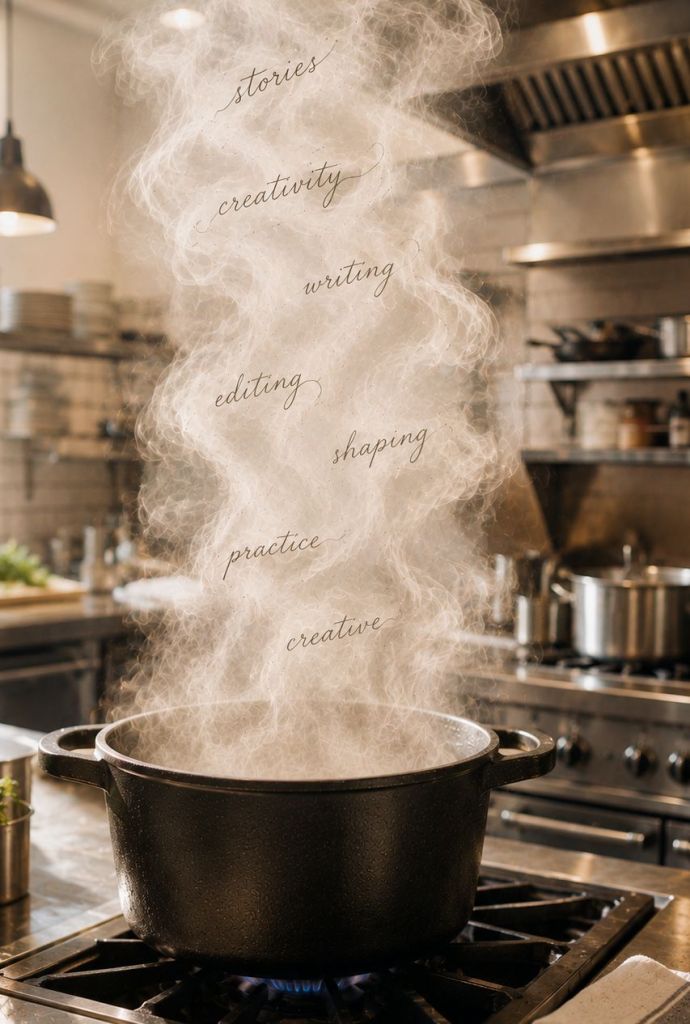
Somewhere in there, it began to feel a lot like a writer’s life.
Writers will gladly put in the work until it feels right. In fact, they understand that there is no other way; no shortcut. They throw away paragraphs and sentences that aren’t shaped the way they want, and start again. And again. They blend new combinations of words and draw inspiration from the outside world all the time. Within both the WordPress community and writers’ workshops, they reach out for guidance asking “Can you read (taste) this and see what is missing?” They begin to see a world they can get to.
In the show, Chef Sydney can never sleep. She lies there, mulling over her mistakes in her mind, and will suddenly get up to test an idea in her kitchen. She strives for the perfect dish. What writer can’t relate to waking up with a burning thought, even a single word they want to change in their story to bring it closer to excellence?
And The Bear does not hold back on childhood dysfunction and its searing effect on some characters. The restaurant, and making it succeed, becomes their beacon of rising above the past, of reclaiming their lives and their joy.
For writers of memoir, I suspect this element is an additional parallel. Just like the chefs, some memoirists also work through their past of an alcoholic parent, or abandonment, drug abuse, or suicide; and more. They are heading towards the exact same goals though: fulfilling dreams and freedom; just using words and stories instead.
Whether it’s a chef or a writer (or other mediums) it is a life about being creative. For some people moving through the world, they just see things a little differently and feel the need, and the passion, to act on it. Thank goodness, there are those around to help and that there are many ways to get there.


Leave a comment