“Those corpuscles carrying oxygen give the stream its color; the rest of the plasma looks very much like seawater” was one of the first comments made in the 1966 science fiction classic movie Fantastic Voyage after a team of scientists who are shrunk to microscopic size, along with their submarine, are injected into the bloodstream of a comatose colleague. Their mission is to travel through his body to reach his brain and perform life-saving surgery to remove a blood clot before their miniaturization wears off. With fans needing to suspend disbelief at an entirely new level, it was Hollywood at its finest. It was a huge success and won two Academy Awards.
Memories of this movie came flooding back last week as I had to go through one surreal experience of swallowing a camera enclosed in a capsule; the nurse actually showing me the initial image on an iPad as the camera slid down my esophagus. Super weird. Talk about suspending disbelief. Luckily, getting the camera to start its journey was easy to do, and I had to laugh when my husband, Dennis, wryly commented, “Thank goodness it wasn’t a Nikon.”
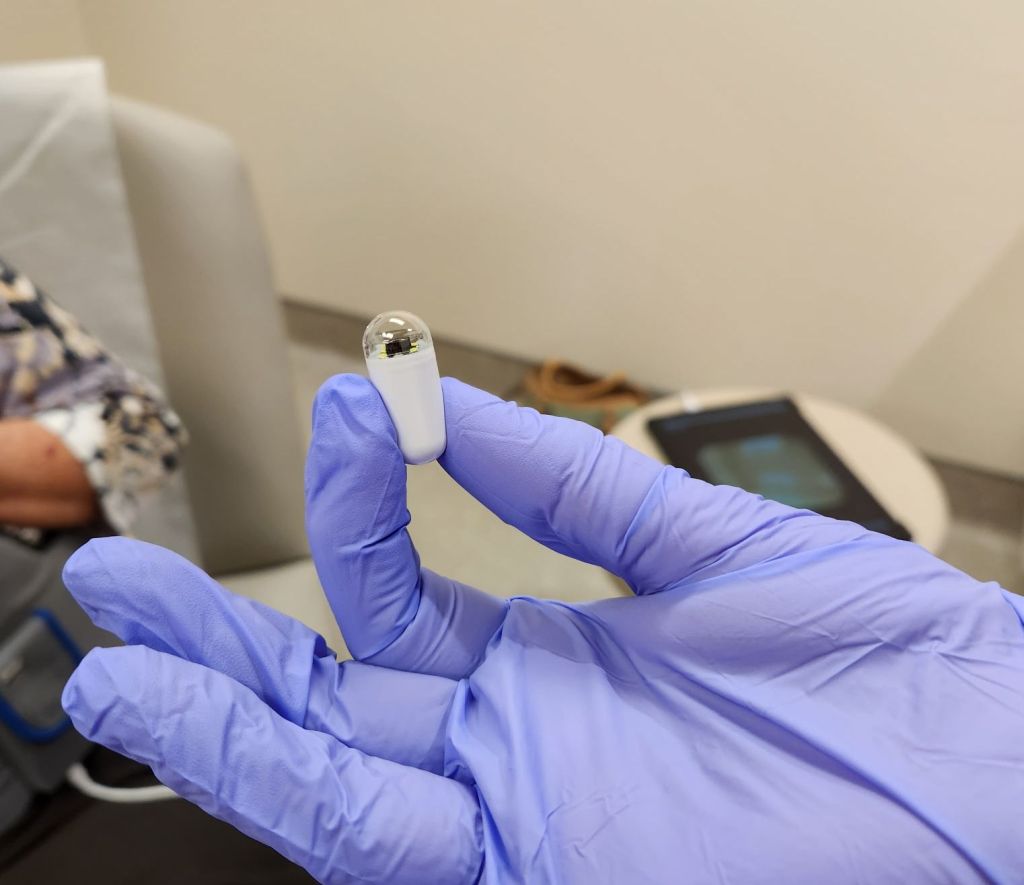
Unlike the movie, the camera would never get near my bloodstream. Its goal was to enter the small intestine and take photos at a rate of two frames per second. On its approximately seven- hour journey, that’s about 45,000-50,000 photos. The procedure is called a capsule endoscopy.
Doctors perform regular endoscopies all the time, placing a scope down a patient’s throat and into the stomach while they are sedated. But they can’t enter the small intestine easily. They also can’t enter it from the large intestine either. Enter the camera.
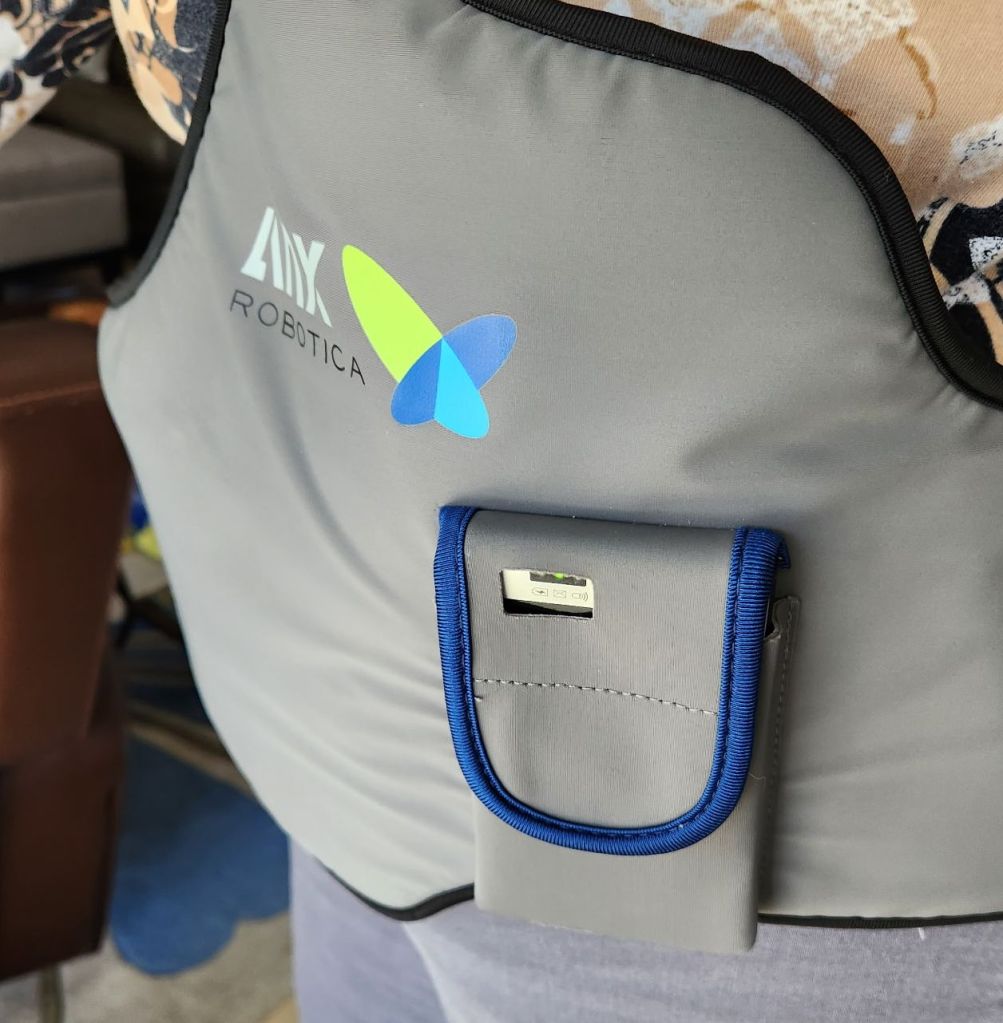
My version of the fantastic voyage took place a week ago. I swallowed that pill (which I have to say, does ironically resemble a mini sub) and they placed a recording device into a vest which I wore from 9:00 a.m. to 4 p.m. In the interim, I could go home and relax (well, sort of) wearing the vest.
The day before involved breakfast, lunch, and Miralax. Later, they allowed chicken bouillon or light-colored Jello, or clear liquids until midnight. Then, nary a drop until two hours into the procedure which landed at 11:00 a.m. when they allowed clear liquids again. Two hours after that, they green-lighted a “light” snack. We returned the vest and the recording device at 4:30 p.m. the same day. That was when I treated myself to a Milano cookie, and a few Triscuits.
So, what’s going on, anyway? A capsule endoscopy can diagnose Crohn’s disease, celiac disease, small tumors, and iron deficiency anemia. Bingo. That’s my problem. I have an extremely low iron level. My doctor discovered it about four months ago.
In cases like these, the first possibility doctors consider is that the depletion of iron is connected to blood loss, often found internally. I’ve had every scope and blood test known to man (and woman) to figure it out; I won’t know until April what my camera found or didn’t find. I am already scheduled for two iron infusions in late March and early April.
For me, this sci-fi-esque story was too fascinating to not take some notes. As I sat comfortably at home, I held a mirror up to my mid-section to make sure the green light on the recording device was on, and the second green light was flashing twice a second. This meant that the recording device was syncing with the camera. The lights remained active all day. (It was worth checking it because I did not want to botch the procedure and have to redo it.)
The story of miniaturizing people and a submarine to be injected into the bloodstream of a person is, of course, ridiculous. But not so ridiculous that they remade it in 1986, renaming it Innerspace which was more of an action-comedy starring Dennis Quaid.
I wonder what those same writers and actors in the original version might have thought about swallowing a miniature camera to enter the small intestine and capture thousands of photos. They would probably laugh it off, saying, “Only in Hollywood.”
But that’s the thing about science fiction. As wild as an idea seems, and given time, it can eventually become fact, like video calls in The Jetsons or holograms from Star Wars, or robots becoming self-aware through AI from The Terminator. Or, swallowing a miniaturized camera and internally tracking it throughout the body. That’s just silly, right?


Leave a comment