My heart beats just a little faster when I look back at reading fairy tales as a young girl. There was so much magic; the preternatural in every story. Anything was possible. I entered the dark forest with the characters, watchful, but excited. Or, I hid nearby while watching the elves secretly making shoes in the middle of the night for the old shoemaker. Some stories were scary, others not, but I always felt something. And they always lit up my imagination (or even helped to develop it).
Interestingly, my heart beat fastest of all with the tales set around Christmastime. To this day, I remember The Little Match Girl by Hans Christian Anderson. It made a huge impression. Outdoors, this girl was so poor and cold on New Year’s Eve, and she couldn’t sell a match. To stay warm, she struck several of them, one by one, and each glow gave her visions of a warm stove, a festive roast goose and a beautiful Christmas tree. But when she decided to strike all the remaining matches, the glow was so bright, she saw her dead grandmother “grand and beautiful” before her. Her grandmother took her in her arms and off they flew to where there was no more cold, nor hunger, nor fear.
The townspeople found her little body holding the burnt matches, but she had a smile on her face. No one realized she had seen such beautiful things and got to leave with her beloved grandmother.
I cried, you know. Little girl tears dropped on my blanket as I lay on my bed, legs up, swinging behind me. It was beautifully sad. I learned people should show kindness and buy a match even if they didn’t need one or provide food and comfort to her. And that there was always hope and solace in an imaginative mind.
I was getting dressed about a week ago, and a whisper came from nowhere “Remember The Tin Soldier.” The memory just dropped from above.
Oh, yes! I remember that story too, I thought, and excitedly went to find it, after first finding my other shoe. It had a Christmas theme too and seemed so timely to reread now.
After finding a Kindle version, imagine my surprise when I started the first page and read that the little boy received 25 tin soldiers for his birthday. (I also learned that the full title is The Steadfast Tin Soldier.)

Birthday? I had thought this was a Christmas tale. I was disappointed. Did I have it wrong? Yes, and no. The original work absolutely states birthday. But something happened over time; The Steadfast Tin Soldier’s story was slightly redesigned. Future adaptations, retellings, and illustrations began to place the events in a Christmas setting instead, featuring decorated trees and piles of gifts.
Some felt that when it was republished with Anderson’s classic The Snow Queen in the early 1900s, this helped cement its growing association with the holidays.
But I love this version the best. German wood carvers, starting in the late 17th century, started to carve nutcrackers into the shape of soldiers because soldiers represented good luck in the home. They were so popular, they slowly spread across Europe and were often given as gifts — Christmas gifts. Nutcrackers became synonymous with soldiers, easily attaching that Christmas identity onto The Steadfast Tin Soldier.

As I re-read it, I remembered his “adventures” in a paper boat (this is where I learned to float leaves and lightweight toys in the rushing water along the curb after a rainstorm) and the incongruous way he found himself back into the toy room with his beloved ballerina.
And I absolutely remember the cruel moment in the end when flames consumed the soldier and the ballerina, only to melt into a small tin heart; together. And yes, I had cried at the poignancy of that ending as well.
Why have I returned to this magical headspace? Because I just finished a full-length book, a fairy tale, The Snow Child by Eowyn Ivey, and I haven’t quite been the same since. I loved it so much, I fell down the rabbit hole hard (and bumping into the rabbit himself, he was none too pleased) regarding everything “fairy tale.” I ended up purchasing a volume of Hans Christian Andersen’s Fairy Tale classics to reread many of my favorites.
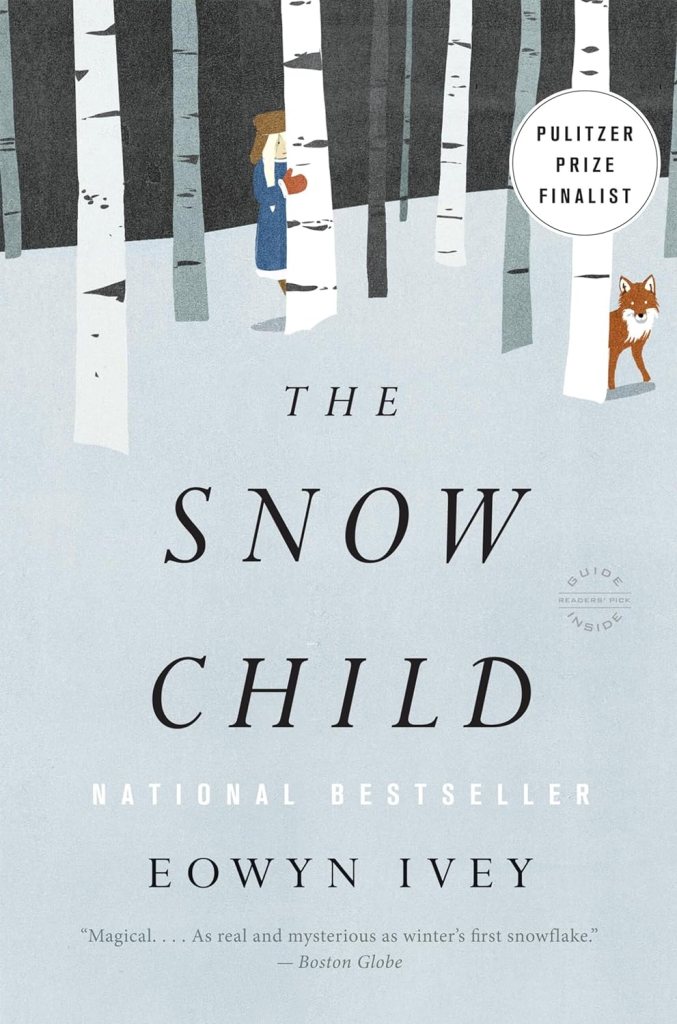
I even turned to MasterClass to watch author Margaret Atwood speak at length about fairy tales and how many of her books are basically using the themes and mythologies of these old stories, but adding a feminist twist. (Boy, Ms. Atwood has a downright evil sense of humor.) And she reminded me she is not alone; the elements of fairy tales continue to be used constantly. It was great fun just this week to read Pete Springer’s post where he reviews two books by Kate DiCamillo; one is the fairy tale, Lost Evangeline. And The Snow Child won a National Book Award in 2013. They remain incredibly relevant.
Click HERE for Pete’s post.
I was deeply happy returning to my fairy tale memories, and to be reminded that true fairy tales are still very much part of the literary world. It was almost ironically, like a Christmas morning for me; two of my favorite things coming together.
Nutcracker Photo by Nikolina on Pexels.com


 Leavingthedooropen.com
Leave a reply to beth Cancel reply