It was the summer of 1973. “Brother Louie”, “Touch Me in the Morning” and “Drift Away” were rotating every hour on my little brown plastic Panasonic Clock AM/FM radio. It felt like every song being released was a massive hit; a special summer of music. Or maybe it was because I became a teenager that summer.
I would frequently lie on my bed soaking in the Top 40. I guess I wasn’t the only family member drawn to music. It’s possible Dad’s nocturnal music habits opened doors to hooks and tempos for me.
One summer activity our family planned to do together was to drive out to Chesterland, Ohio to spend the day with my dad’s best friend from college. He and his family had moved from Cleveland Heights two years prior, and they now owned property which included a pond where they could fish, canoe or swim. I loved to do all three.
But nothing beat that afternoon run, when usually the kids all piled into the car, hair wet and barefoot, and drove down 306 County Road to Dairy Queen. I always ordered a vanilla cone dipped in chocolate. Then the race was on to lick it fast enough before it melted in the summer heat. Licking and laughing, we looked at each other with messy faces and drips on our t-shirts. Our grins were as wide as the open countryside around us.
That summer, I also rode my bike everywhere. Always riding fast, I controlled my destiny on a whim. I could ride over to the junior high school tennis courts and look for lost tennis balls. I could ride to Hough Bakery to buy more Mexican Wedding cookies, or I could ride down to Coventry, a hippie neighborhood where people wore tie-dye and sold little glass pipes in many of the stores.
One night after dinner, I rode my bike to the Cleveland Heights-University Heights High School baseball fields. My sister, Heidi, and her boyfriend were on a softball league, and they were playing that night. Summer evenings meant that the high-wattage stadium lights had not yet turned on in the field. I leaned my bicycle against the fence, locked it and walked over to sit on an aluminum bench in the stands.
The game started. Soon, I saw a familiar face walking towards the same fence. It was Dad. I knew from his walk that he was drunk. He placed his hands on that fence and curled his fingers into the spaces.
What was he doing here? I thought.
“Dad,” I shouted. “What are you doing here?” I did not remember ever seeing him come to a game. Heading down the aluminum steps, I walked up to him.
“I came to see my daughter play some softball” and he turned, swaying a little, towards the field to watch the action.
When Heidi’s team left the outfield, she immediately headed towards us.
“What are you doing here?” she asked angrily. She was looking at Dad.
“Can’t I watch my oldest daughter play?” he countered, trying to steady himself with that metal barrier he clung to.
Heidi shocked me with her reply.
“No, Dad. You can’t. I don’t want you here. You’re drunk.”
The cruel-to-me words just poured from her mouth, and Dad’s face crumpled.
This betrayal cut me deeply. First, she was calling out his “secret” behavior in a public setting. She was violating a family oath.
(Only later would I learn she was absolutely right to set her boundaries. She had started going to Alateen meetings. This was the organization that helps teens with a loved one’s drinking).
I didn’t know about that. All I saw was a version of Dad who was trying hard to be good. How could she not see that? Feel that? He wanted only to be normal for maybe half an hour and have fun watching his daughter play, like a million other dads. Maybe he needed this just for this one night.
“Let him stay!” I pleaded silently. I was terrified of some kind of repercussion.
No. She turned her back on him and walked away. The sight of him shuffling off back to his car affected me deeply.
It was a stony, gravelly parking lot, and he kicked up dust as he moved further away. It seemed as if he was slowly vanishing in front of me.
“Dad, wait, I’ll go with you,” I shouted, but he just waved me off. It was a crushing moment. I was learning not only that we couldn’t camouflage his drinking anymore, but that it was insidiously shoving our loving dad to a place where he would not return from. I couldn’t stop the tears.
Unlocking my bike, I left too. I just rode. Blindly. My legs pumped like an old piston engine, pushing the pedals, up and down, over and over, even when they were getting tired. Sometimes, I stood and drove the pedals even harder. I was working my legs to work my mind. Tears flew off my cheeks from the speed.
Then, a thought occurred to me. What if he blacks out and doesn’t remember what happened?
It would not be the first time. And then everything would be the same again. This would be the best possible outcome.

My legs slowed. I stopped pedaling at the local park and got off my bike and lay in the grass. Staring up at the streetlights, I tried to sort things in my mind.
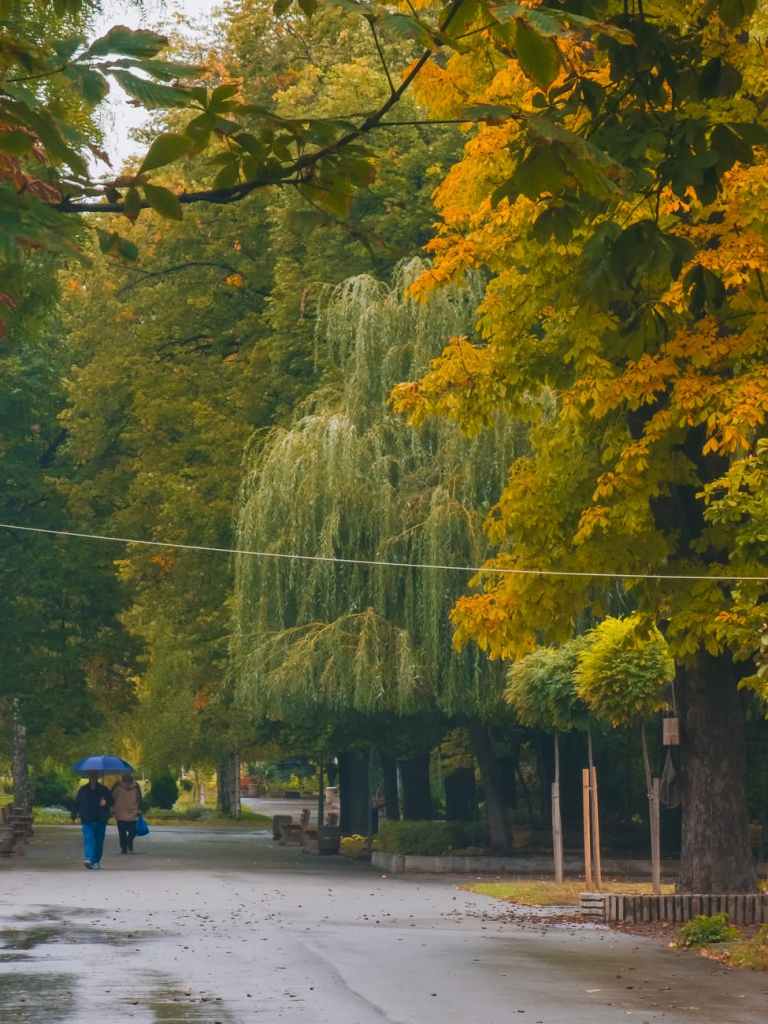
I liked lying there. The grass smelled good, and the ancient elms and a few oak trees stood facing a summer breeze like they had for probably 150 years. (Actually, I had no idea.) How did they survive? They knew stuff I wanted to learn.
The trees held such a majestic stance. Given the space, they had become strong and impenetrable. Confidence oozed from them. They had survived times when rain was scarce, when sidewalks and amphitheaters had stripped away some of their land; and when competition had grown up around them. Their older roots had fought the young roots and won. I thought about that. I think I was a young root, and I didn’t want to experience the pain of being swallowed up by the older roots. I wanted to survive.
Bike photo by Ru00fcveyda on Pexels.com


 Leavingthedooropen.com
Leave a reply to Wynne Leon Cancel reply