Starting when I was very young, I remember visiting the home of my grandfather’s new wife. She was another Cleveland artist and her name was Dorothy Turobinski. Her medium was weaving and Billie Grauer moved in with her in 1964. At 4200 square feet, it was the biggest house I had ever been in as a child.
In my little Mary Jane shoes, I will always remember climbing the staircase; the wall on the left held several Grauer paintings. Some were scenes of Mexico and some were abstracts. Dorothy’s studio was at the top of the stairs.
She had two large wooden looms she used for her artwork. They faced each other. There was a bookcase lined along the back wall, filled with a hundred skeins of different-colored yarn and threads.
She caught me sitting on the loom seat once, trying to play with the pedals and running my hands over the piece she had stretched out on the loom.
“Melanie, never touch either of my looms!” she said loudly, hurrying towards me.
I must have looked scared, and she softened, explaining that it was her work and it was very important.
“Can I watch you?” I asked.
“Not today, but maybe someday,” she offered, but that never happened. Truthfully, she was skittish around my sister Heidi and me; she never had children and usually kept her distance when we came to see Billie.
I found a second staircase by their bedroom and climbed up it. This room was much smaller, having to follow the roof line. It was cramped, but there were two windows, one facing east and one facing south. There was a strong florescent overhead light, maybe for cloudy days. I had found Billie’s studio. Paintings signed William C. Grauer leaned against the walls. It was almost as if I had found the Holy Grail.
I reference this home and these memories because when I was maybe 12 or 13, Billie hired my sister Heidi and me to clean this house every other Saturday. In all fairness, we didn’t touch bathrooms, their studios or half of the downstairs, although I remember cleaning the windows in the front living room.
Mostly, we arrived at 9:00 a.m. on Saturday mornings to clean floors and dust; clean windows and crystal.
On my first day, Billie taught me to crumble up a newspaper page and use it so the windows wouldn’t streak. There could be no substitute!
I also “Windex’ed” all shapes and sizes of crystal and glass items. For instance, Dorothy’s lamps had sparkling tear drops dangling everywhere. There were also several rectangular and oval mirrors in the hall and guest room.
As I moved from room to room, Billie would check in on me frequently. I saw him open the Windex bottle once and add some water to it.
“It won’t work as well if it’s diluted Billie,” I said.
He just laughed and replied, “this stuff is so strong, it really should be all water with just a little cleaning solution honey bunny,” as he handed it back to me.
Then he would sit in a chair close by, leaning on his cane and talk to me.
“I learned how to make things last during the Depression,” he shared. “You know, people weren’t really buying art in the late 20s and 30s, so your grandmother and I really had to think of new ways to find income and stretch our money out.”
In fact, I have an old oral history project I did with my grandfather during my junior year in high school. It was specifically about the Depression. It’s probably that very conversation which inspired the interview.
As I wrote in 1977, “to earn income, my grandfather tried his hand at advertising illustrations. Department stores hired him to draw their products, and they appeared in the weekly newspaper. He also did mural painting, architectural renderings and taught students for a small fee.”
One job he recalled doing was that of woodworking on an old desk, which belonged to an antique gallery on Euclid Avenue just down the street from his own studio where my mother and her parents worked and lived. Its original price was $125.00, and they paid Billie for his work in-kind with a silver platter and eleven handsome place settings from England. The value of both was about $90.00.
“The desk sold in three weeks for $600.00” he exclaimed, almost gleefully. He was proud of his work.
At one point, Billie became involved in the government-funded Works Progress Administration (WPA) project. Created by President Franklin Roosevelt as part of his New Deal, the government hired artists to get them back to work. Their paintings and sculptures, etc. graced the halls of schools, hospitals and municipal buildings across the country. Local artists were asked to capture “the social character of Cleveland in the troubled 1930s.” Most of those paintings are quite difficult to track down; lost to time.
I don’t remember talking too much about myself, meaning school or home life on these Saturdays, and that was fine with me. I enjoyed hearing his stories much more.
One day, he had just paid me and sat at the kitchen table reminiscing.
“I was the sixth born of nine brothers and sisters, my parents came to Germantown in the latter part of the 1800s and my father became one of six brew meisters in the country. He worked hard. As a matter of fact, we all worked hard. My daily task was to take my wagon to the local icehouse. From there, I sold blocks of ice to my neighbors. Everyone was expected to pull their weight.”
My imagination took hold. Billie was born in 1895, so if he was nine or ten, this would have been in roughly 1904. This is just a few years before the time in A Tree Grows in Brooklyn, a book I had read for school. He was right that life was hard and I could almost see him pulling a wagon past Francie’s house, even though they lived in different states. Her story was fiction, but his was living history.
It occurred to me many years later that he may just have been trying to instill a small lesson about a good work ethic. He was wise and almost Yoda-like sometimes.
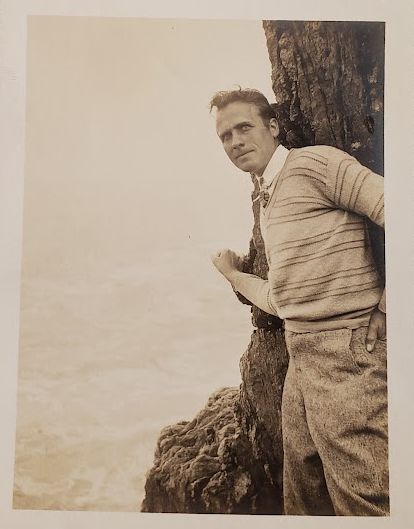
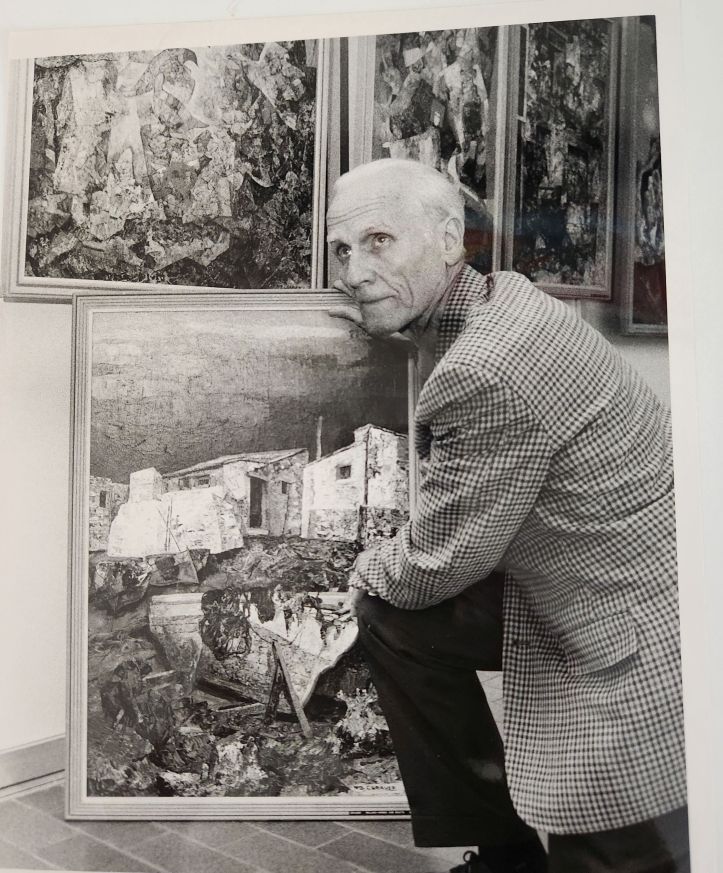
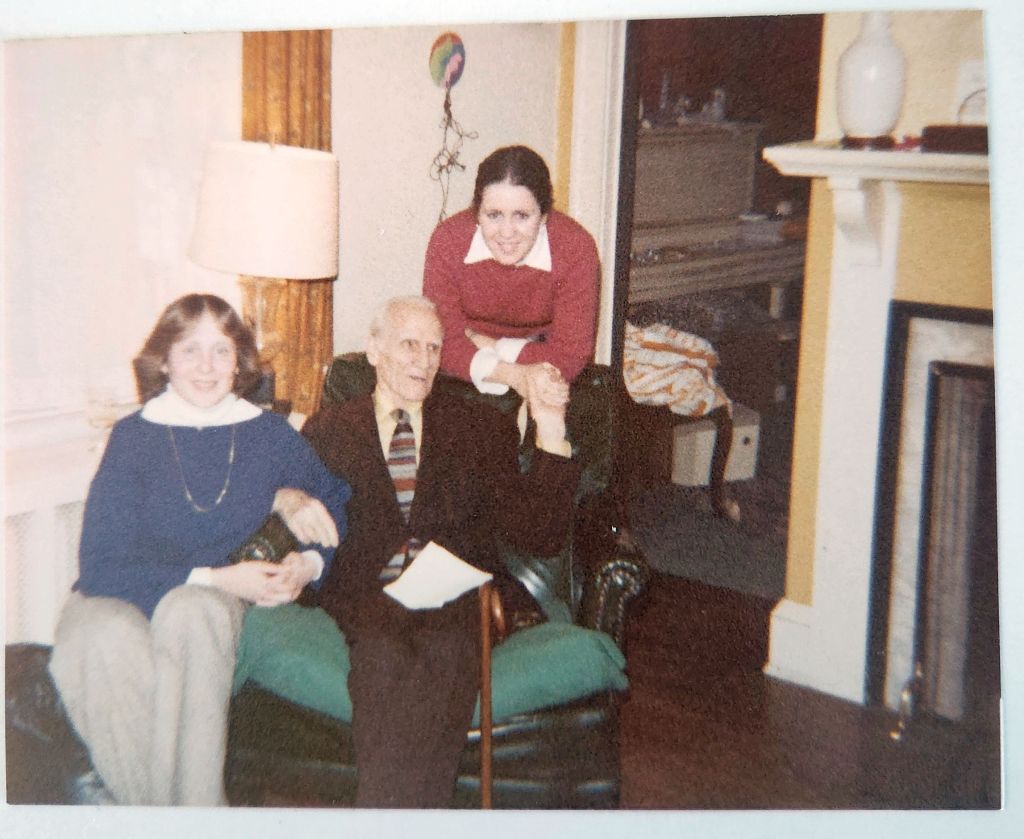
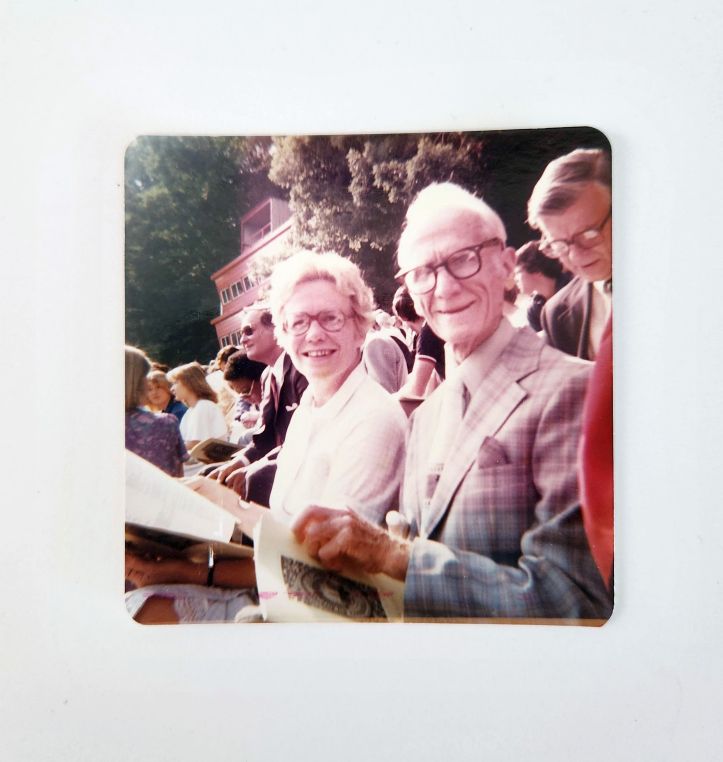
My grandfather was funny (he loved horrible puns) and he was a natural teacher. Aside from his many commissions, the Cleveland College agreed to let him and my grandmother to start an art department there; they taught many classes side-by-side.
My own Saturday lessons moved well past dusting and cleaning windows as I became an able apprentice in his garden. He loved his garden so much, but it had been getting harder for him to plant and weed. He would sit in his lawn chair to keep me company; occasionally offering direction and pointing with his cane. We talked, but sometimes, we just shared a quiet camaraderie.
Billie paid me $15.00 dollars for my roughly three-hour work schedule on those Saturdays 50 years ago. I think it went up to $20.00 near the end. Of course, hearing his stories and that time spent with him remains priceless.
Being in his home also gave me the chance to visit his studio sometimes. I always liked it if there was a painting in progress sitting right on the easel. What a tiny, magical place where creative ideas transformed into a real image on a canvas. His breadth of abstracts and landscapes and even medieval figures feels legendary; so many were born in that room.
We were not the type of family who were ever going to cook or eat dinner together. We didn’t even go out to eat together. Billie didn’t drive me to places like so many active grandparents do today to help out.
But we had this. We had our Saturdays. This was the way he found, I think, to be with me and my sister, and to pass along his journeys and lessons to us. They will always shine within.
These are just a couple of examples from his different eras:


 Leavingthedooropen.com
Leave a reply to melaniemcgauran Cancel reply