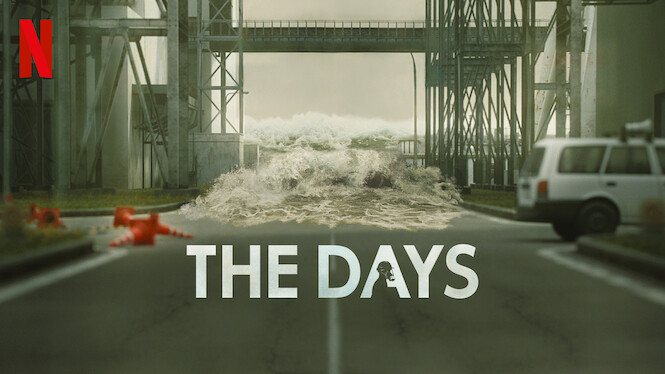
When they announced The Emmys for outstanding television programming, I wanted to see a nomination or two for “The Days.” It is an eight-part limited series on Netflix. Sadly, the show was overlooked. I was relieved to learn later that its date of release pre-empted it from qualification in the 2022- 2023 season. So, there is next year.
After watching only 3 or 4 of the 8 episodes, I found I got so immersed in the story; I grabbed my computer and started writing about it. Why did I “feel” this story so much? At the end, it was like “how could I not?”
It is a “based on true events” story about the Fukushima 9.0 earthquake in Japan and the resulting 49-foot-high tsunami which hit the Fukushima Daiichi Nuclear Power Station on March 11, 2011. The tsunami destroyed the plant’s power supply and critical cooling systems.
This is not The China Syndrome; the 1979 American disaster film about a fictional nuclear reactor meltdown. It was tense, but wrapped up, a la Hollywood style, in two hours.
“The Days” has 400 minutes of slow, grinding action and reaction. It digs into the minutiae of the minutiae of “working the problem” as they try to prevent the nuclear units from overheating. There isn’t some miraculous fix, in fact, it’s the opposite. Combing through books of procedures, they try Plan A to Plan Z, as every idea falls like dominoes. Every hour, the reactors are getting warmer.
One huge issue, for example, is that they need to fix the lack of power the earthquake and tsunami took out. If the controls in the Control Room don’t have power, how can they manage the valves and water pumping to prevent the catastrophic overheating and meltdown?
They are forced to try a lot of it manually. About a dozen employees spend over 120 hours in the small Control Room for Units 1 and 2 (there are 4 reactor units) which sits adjacent to the volatile units. From there, these men are ready to do what the supervisor asks; even if it means exposing themselves to deadly levels of radiation. They put on safety suits and masks and try to enter Units 1 and 2 to find (in the dark) the specific valve they need to open in order to vent the growing pressure.
It seems like with every minute, the amount of radiation leaking increases and the monitors on their suits tell them to return to base. They do open one valve 25% which helps with venting.
The next time they try, the suppression chamber they need to stand on to reach another valve is so hot, the brave employee’s shoe melts instantly on contact. They retreat.
There is a sudden explosion. Terrified, Station Manager Masao Yoshida rushes to a window and sees the smoking remains of Unit 1. It ended up “only” being a hydrogen explosion, but it released enough radiation outdoors to be above the legal limit to be near it. It will also hamper efforts with twisted metal on the roads and damage to helpful equipment like cooling down hoses laying in the vicinity. There would be three more similar explosions.
They find a significant well of sea water from the tsunami on the premises. There is so much water they could use for cooling, but is sea water safe because of the salt? The Japanese government and Yoshida spend valuable time debating the issue. It is tense.
I understand I am getting “into the weeds” here, but that’s the point. As viewers, we are indeed in the middle of the crisis. There is an immediacy we all feel. The production does such a good job of conveying the intense pressure and time crisis the workers face as they, as another example, post the rising pressure numbers every hour on a giant white board.
I think I started the show based on my interest in tsunamis and large waves (Full post HERE.) The director allows us to see not only the approaching wave, but it’s impact as it rushes in slamming into the windows and doors of the power plant. But honestly, that is just the precursor to the heart of the story.

We watch Yoshida, the plant’s Operations Manager, face enormous decision-making. The somewhat surly Prime Minister is interesting to watch. The employees’ bravery is inspiring. Volunteers arrive in the zone, also knowing they could die. A mother waits to hear news of her missing son. The whole immersive story drew me in.
Right near the end of the series, the calamity levels out. The U.S. starts to bring in relief materials. Workers manage to inject water into the reactors, cooling them down. Finally, they restore the power.
This is a Japanese production with flawless dubbing. Many signs on buildings etc. are translated for us. The series is based on a book and famous testimony given by Yoshida himself. Sadly, he died two years later from cancer. He thinks it was caused by the stress of the accident and “too much smoking.” I don’t think he was fooling anyone.
Japan continues to decommission the plant. This includes removing all the debris from the hydrogen explosions, which still emit a toxic amount of radiation. They needed to remove 600 Cherry Blossom trees on the grounds because they became contaminated. They are slowly disassembling the units. Three reactors experienced the meltdown of their cores.
Although Chernobyl remains the worst nuclear accident in history, Fukushima is a cautionary tale. Yoshida thinks it was man’s arrogance that they could beat back the sea and build on a mountainside (33 feet above sea level) and not face eventual repercussions. Over 100,000 people needed to leave their homes. Over 19, 700 people died.
This series was sometimes technically dense, but the themes of man vs. nature, loyalty, commitment and human ingenuity are at its core. This type of drama may not be for everyone, but it happened, which may make it worth your time.
**UPDATE**
It was announced on the morning news today (8-24-23) that officials at the plant have begun to release long-held contaminated water from rain and run-off into the Pacific. They have no more room for the holding tanks totaling one million tons of water. The fishing industry fears this will destroy their livelihoods. China just banned any fish being sold from Japan.
The power company TOEPCO assures the industry and consumers that they filtered the water down to one radioactive compound which they diluted to meet international standards. Their conclusion is that the fish will be safe to eat.


 Leavingthedooropen.com
Leave a comment