I only had one grandmother growing up. She was my dad’s mother, and she was kind, full of class, and very independent-minded. She was also blind.
She wasn’t born blind, but cataracts took her vision in the mid-1950’s. Modern cataract surgery was just around the corner, but it came too late for her.
Since I was born in 1960, I eventually understood that she was never going to “watch me Grandma” do a cartwheel or play in the pool. Over time, I grew to admire her strength and abilities to adapt. Her name was Sara Vanderhoof. She was known to many as Mother Van.
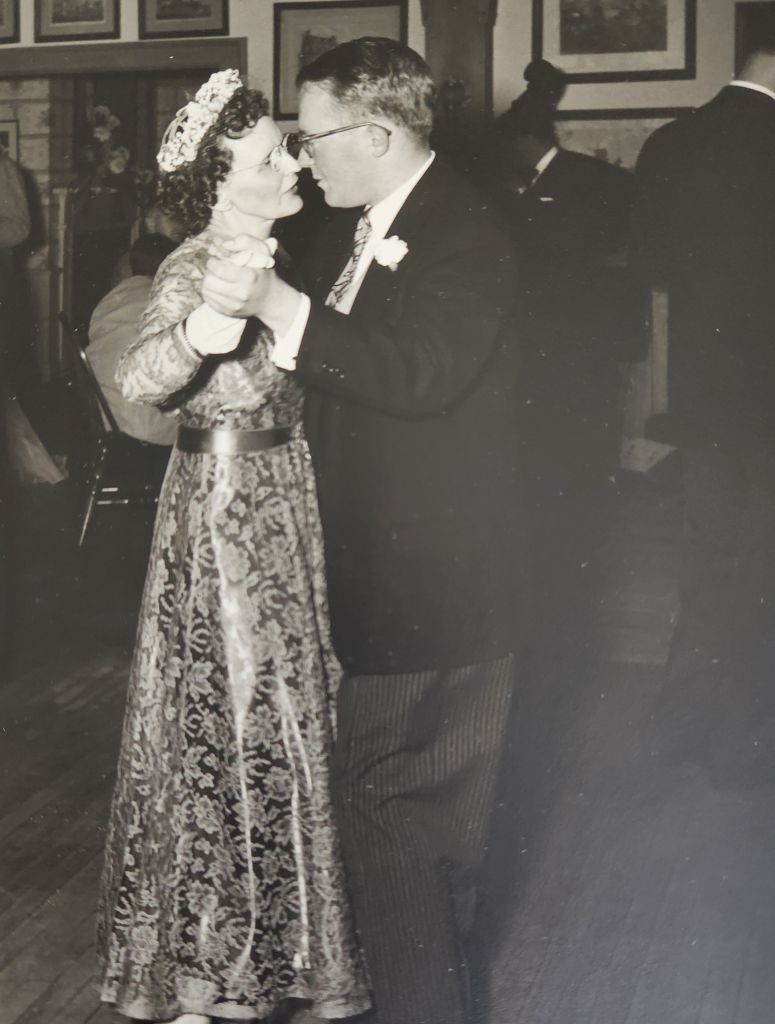
Starting in the late 1920’s, she raised three boys. And those boys had a complicated relationship with their father. In all honesty, he was a tough person to get along with. I know her life was not easy. Then, sometime after she lost her sight, my grandfather divorced my grandmother, married someone else, and moved away from the Cleveland area. They had been married over 40 years. She stood tall through it all, always in her smart-looking suits, and chose to live alone in her own apartment.
I loved visiting that apartment. We got off on an elevator on the second floor and walked down a long hallway with a plush, green floral carpet. We would knock on her door to the rhythm of “shave and a haircut..two bits! My sister Heidi and I handled the “shave and a haircut” portion and she responded with the “two bit” piece of the knock.
We could then hear her sliding the long chain to free the lock and she would open the door.
“Hello my girls,” and she opened her arms for a hug.
We talked in her living room and I always chose the chair next to her extraordinary display of porcelain miniatures. I loved looking at the tiny houses and dalmatians, ducks and fish and deer. There must have been 300 of them displayed on a mahogany three-tiered side table.
She also had a beautiful piano, which she once played. I think because I showed an interest in it; she left it to me after her passing. Her great-grand son, my son Will, played it wonderfully. It had a whole new life in Chicago. I still own it, but he can have it anytime. I never looked at it this way before, but she had a meaningful influence on my future family.
“Above all, be the heroine of your life, not the victim.”
Nora Ephron
She was a quiet woman, but it wasn’t wise to equate that with a lack of tenacity or resolve. What I admired so much about her was that she was always teaching us what she learned in order to live alone as a blind woman. One time, she moved with her cane over to her purse sitting on the table and withdrew her wallet. She had several bills inside. She removed them, felt each one, and explained.
“This is a five-dollar bill,” she instructed and handed it to me. It was like magic. How did she know? She knew because she folded it length-wise. She handed Heidi the next bill, which she explained was a ten-dollar bill. She knew because it was folded width-wise. Twenty-dollar bills were folded both ways, or simply kept in a separate, zippered compartment meant for only 20s. One-dollar bills were not folded at all.
Another time, she took us into her closet to share how she knew to match her blouses with her skirts. She used safety pins: one for white, two for creme, three for black, etc. Often, she knew her clothes well enough that she might feel the collar and recognize that it was her favorite pale blue blouse, or she felt the texture of the skirt and recognized it was her dressy skirt for special occasions.
She was also willing to open a book written in Braille, and move her fingers across the dots, reading it out loud. I think I could have watched her do that all day. It was an extraordinary concept then, and it’s an extraordinary concept now. Louis Braille (1809-1852) was brilliant.
I don’t remember the details, but I’m pretty sure she had someone come in and assist with groceries and cooking. We often went over to my cousin’s house for dinner and sometimes, she was driven there to join us. My sister told me she loved sitting next to her at dinner because she could say “Grandmother, your potatoes are sitting at 3:00 o’clock, the turkey is at 12:00” and so on. The plate was a clock.
I really don’t know if she was “preparing” us for the possibility that we, too, could lose our sight one day. She certainly didn’t know about all the corrective surgeries that exist now. I do know that she was aware that cataracts were forming in my father’s eyes. Maybe it was to help him.
She died in 1974 when I was only 14. She was 73.
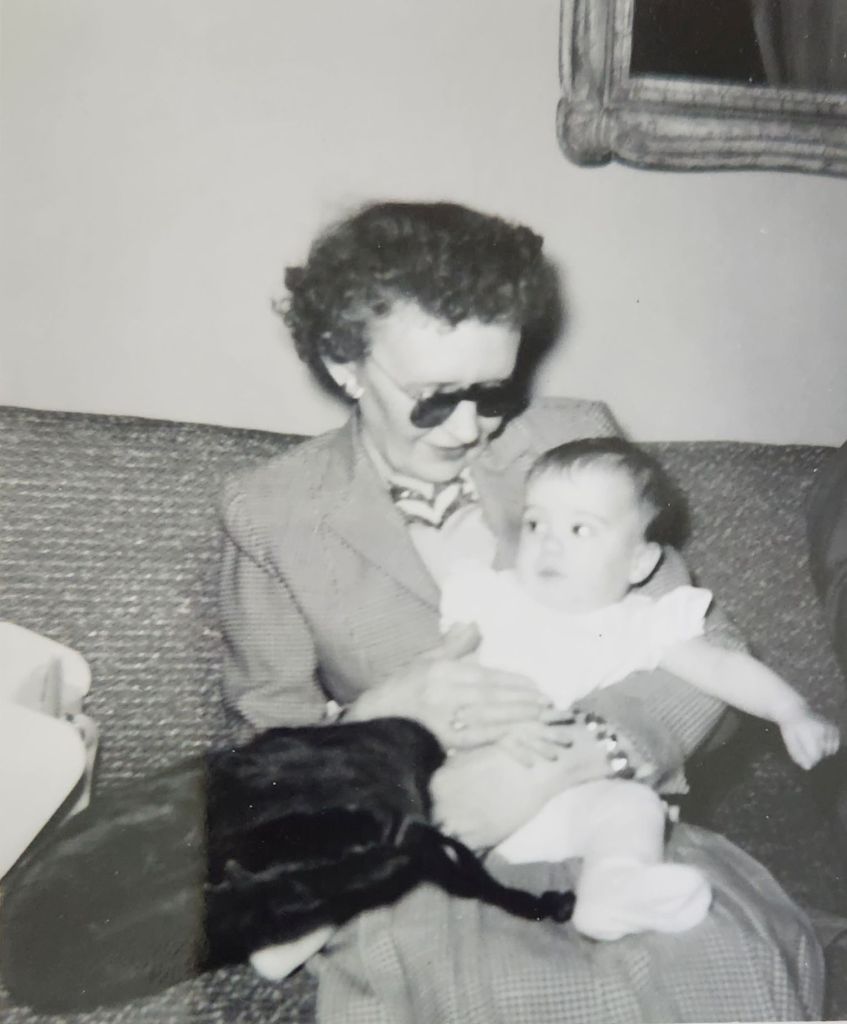
I was inspired to share her story after finding this photo in my Baby Book. I was about six months old. I think my grandmother’s legacy was overshadowed by my mother’s side of the family and their history in the art world. But Sara was a role model too. She faced much adversity, but handled it with such grace and quiet dignity. I connect with that strength.


 Leavingthedooropen.com
Leave a comment